Tuesday, August 4, 2015

The Power of Reflection

August is a powerful month for teachers. We've rested, we've recharged, we've "Sharpened the Saw" in 7 Habits language.

And we've reflected. (Trust me, that's what we were doing on the beach. I promise. It just looked like a nap.)

What worked? What didn't? What will I use again, and what will get chucked into the circular filing cabinet? That TpT lesson looks amazing -- ooh, and what about having my kids blog this year?

Forget spring -- August is the time for new beginnings and fresh ideas, at least in Educationland.

This process of reflecting shouldn't be left to teachers alone. It's a powerful tool, and one we need to help our kids learn to use. In fact, I name 2015-2016 the "Year of Reflection."

I'll think about it and let you know how it works out.

After my nap.

Tuesday, May 5, 2015

Creative Chaos

My classroom is an utter disaster area. So bad, it's giving me the heebie-jeebies. With our showcase two short weeks away, my kids are in full creation mode.

It doesn't help that two of my fifth graders have chosen to study Rube Goldberg machines for their Genius Hour projects, and have been constructing a roller-coaster like device that incorporates marble runs, dominoes, K'nex, LEGOs, Snap Circuits and cocktail umbrellas -- among other materials. I believe its purpose is to ring a bell.


I have, strewn around my room right now, a miniature physics museum for kids, a student-invented air cannon and more robots than the entire Transformer movie franchise.

Posters and tri-folds are tucked away in a corner; LEGO movie sets are hiding on high shelves (to keep kindergarten fingers away).

I have had kids begging to work on their projects at lunch, at recess, before school and after school. I promised my second-graders, who have lunch bunch tomorrow (a time set aside only once every two weeks for stories and bonding), that we'd make it a "working lunch" so they could keep typing up their research.

They are so engaged because of choice. I've already written about the LEGO robot dinosaurs. With my third through fifth graders, I've jumped on the Genius Hour bandwagon. Basically, they got to choose any topic or skill they were passionate about, then researched it to present at our GT showcase. 

I created a rubric to ensure quality projects (we've talked a lot about quality this year), and they are definitely rising to the challenge.  Will every kid finish an amazing project? Probably not -- I wish I had the key to motivating 100 percent of my kids, but I'm still learning what makes some of them tick.

Still, this year's showcase products are amazing me right now -- and we still have two more weeks to see what they come up with.

I just need to look at all that chaos, take deep breaths, and keep reminding myself of that.

Saturday, May 2, 2015

Growing Storytellers

"I wrote a chapter book!"

This pronouncement, unexpected from the lips of a first-grader, made me smile. She had taken to our latest project with gusto, and had been writing on Storybird for hours.

This fantastic website was shared by a friend last year, but has really taken off with my storytelling group this semester. (For more great tech ideas, check out Cristina Popescu's blog "Think Appy Thoughts!")

Basically, the website provides the artwork, and your students pick the picture that inspires them. They can write poems, chapter books or picture books, and can even "publish" their stories to share.

The basic level of the website is free, and teachers can sign up 30 students (after that they have to pay for subscriptions). It's also safe: Teachers can moderate all stories and comments that their students make, and any stories published in the public realm are moderated by the website's team for family-friendliness.

I shared Storybird with the teachers on our campus, and the first grade teachers decided to sign their classes up. One of their students enjoyed writing so much, she authored the picture book "How to Write a Book on Storybird."

Although I'm using it in class with younger elementary students, I can see this working with kids through high school -- or even adults. 

I'm personally working on a children's chapter book right now -- it's pretty rough, but I promised my students that if they're writing, then I would, too. They love being able to see my writing take shape, and giving me suggestions on it.

Enjoy!


Saturday, April 25, 2015

Curing Done-itis

For the past few months, I've been working with small groups of first and second graders, helping them to learn the ancient art of storytelling.

I call it storytelling, and not simply writing, because writing, at least in school, has been reduced all too often into a boring, drill and kill skill. Being able to turn that skill into a story, however, is an art (plus, kids are much more excited to learn "storytelling" than plain old "writing.")


I started with Mensa for Kids' storytelling packet. I turned their introduction article into a video, then played Robert Munch reading his Paper Bag Princess.

The kids were hooked.

We practiced our voices and movements, then learned about the story mountain (and I mentioned they would learn later it's called the "plot diagram.")

Finally, time for the writing. I found "Yolanda the Yarnspinner" in the Primary Education Thinking Skills books. She talks of using "colorful language" to tell a good story, encouraging kids to use words like "billowing" and "sparkles."

I turned them loose with sentence starters: "The baby cried" and "The dog barked."  

Then came what I had been afraid of.

"I'm done!" one munchkin announced, about 5 minutes into her writing. "Me, too!" another exclaimed.

I had to act fast.

"Oh, my friends," I announced in a dramatic voice. "I think you have that disease. That terrible disease."

I shook my head.

"What disease?" one asked, completely hooked.

"Done-itis," I pronounced. "You think you can rush and rush and yell 'I'm done!'"

I hammed it up. "I'm done! I'm done!" I yelled in silly voices.

They giggled.

"Do you think Robert Munch -- the guy who wrote the Paper Bag Princess -- rushed through his story and yelled 'I'm done!'"

"Noooooo," they chorused.

"Nope," I agreed. "Or do you think he wrote, and he thought about it, then wrote some more, then thought some more, then wrote again -- and finally, finally, after lots and lots of work, he leaned back, smiled and nodded, and announced, 'Yes, I am done.'"

They nodded. Yup, that's exactly what he must have done, they concluded.

"So, my friends," I asked. "Are you really done? Or do you still have more thinking to do?"

They smiled and turned back to their writing, and for another ten minutes (an eternity in a 6-year-old's world), my room was silent as eight little hands put pencil to paper. I got stories of alien mothers and snowman babies, robbers and werewolves.  Stories they were proud of. Stories they were excited to share. Stories that they knew they had put some hard thought into -- and stories that, when they were done, were really, truly done.

Saturday, April 18, 2015

On the Nature of Paradigm Shifts and Control

   I am a really impatient person.
   If I see a cool idea, or a lesson that I think will work really well with my students, I want to try it RIGHT NOW.
   This has led to some spectacular successes (see the robot dinosaur).
   And some spectacular flops.
   But I keep trying, because I am not afraid of risks. I am not afraid to try something new. And sometimes, in my heart of hearts, I get really frustrated with people who are.
   That's when I have to remind myself -- often multiple times -- of what is in my circle of influence.
   It's part of Covey's 7 Habits -- your circle of concern is everything that you worry about. At work, this usually revolves around adequate differentiation for my gifted students. But I cannot walk into every teacher's classroom and demand immediate change (although I sometimes fantasize about this).
   Instead, I have to figure out what is in my circle of influence -- what can I realistically do to affect that which is in my circle of concern?
   First and foremost, I had to get involved. In her blog, Tamara Fisher wrote "If you're not at the table, then you're on the menu." So I joined committees, and leadership teams.
   This week, I got the chance to have a big impact on my circle of concern. At one of the meetings, we began talking about how to keep the momentum going for the Leader In Me on our campus. It was decided that next year, we would roll out the new "Habit 8" -- the habit about finding your voice, and your passion.
   I waited, baited breath, for a chance to speak. Because I had a COOL IDEA. One that I would love for us all to do RIGHT NOW.
   My moment came.
   "Um, have you guys heard of Genius Hour?"
   Based off of Google's 20% time for independent, autonomous projects, schools across the nation have been jumping on the Genius Hour idea. Basically, you dedicate one hour per week to independent, self-chosen research. Your students can learn about anything they might be passionate about, from robotics to fashion design to the Mona Lisa.  My third, fourth and fifth graders are all wrapped up in their Genius Hour projects (more on that next week), and I think it would be an amazing thing for our campus to implement next year.
   I'm really hoping -- fingers crossed, toes crossed, even eyes crossed -- that my suggestion takes off. Because it would lead to big change -- paradigm-shift type of change -- on our campus, and for our kids.
   But I can't control that. I can only influence, a little at a time.
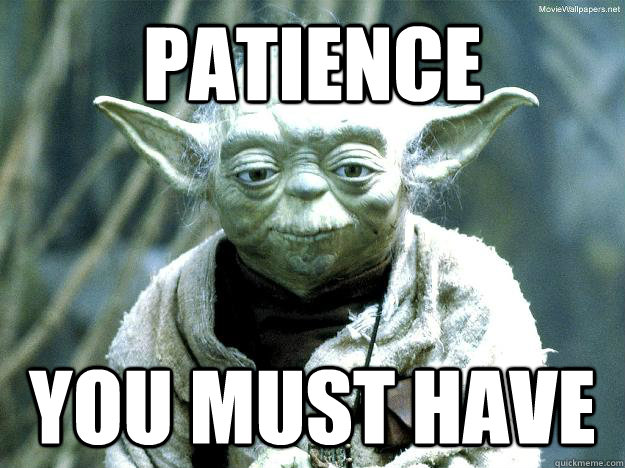
   I really need Master Yoda.

Saturday, April 11, 2015

Learning to Facilitate


You know you've done something right as a teacher when seven 8-year-old boys come into your room right after recess, see a stack of books and say "ooooh, research!"

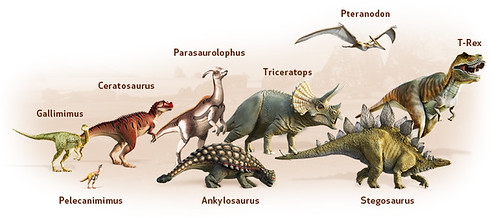
My second graders have officially begun work on their LEGO robot dinosaur project. I introduced them to robotics using LEGO's WeDo robots. They took to it like little ducks to water -- or rather, like little pterosaurs to the sky.

To help the project along, I asked our librarian for any books she had on the subject. This being an elementary school, she provided us with a pile of dinosaur books. I spread them out on the table, and had planned to have the kids look at the pictures, pick out the dinosaur they wanted to build, and move on from there.

Here's where the magic happened.

First, they each grabbed a book or two, and curled up somewhere quiet. (A bookworm myself, I have lots of reading nooks around my room in the form of carpets, floor pillows and a big comfy papasan chair.) Then one of them says, "Mrs. Z, can I get some Post-its to take notes on what I'm reading?"

Well, if you must.

He passed sticky notes out to all the rest, and I set the timer for 15 minutes, figuring they'd be ready to move on after that. 


The timer went off, and a collective groan went around the room. "We need more time! Please!" 

Well, ok then.

They started to get excited about what they were reading, and began pointing it out to the other boys. "Did you know dinosaurs are still alive today? Birds are living dinosaurs!"

Then my chattiest one piped up -- "Guys! Guys! We need to be quiet, and take our notes so we can read as much as possible, and we'll share it after!" 

"Oh, yeah yeah yeah." And they settled down.

Well, alrighty then.

Seven boys. After recess. My squirlliest group every week. 

Silent. Reading. Taking notes.

Because they got to choose. They own this project in a way that makes them intrinsically motivated to do their very best on it.

Sometimes, as a teacher, your job is to teach. But sometimes, you get to learn. And today, I learned a very big lesson in facilitation. Over the last few years, I had given my boys the tools -- they knew how to take notes, and group them afterwards into categories. And they had the confidence to look at a pile of books and decide what they wanted to do with it. 

They didn't need me to be the boss today.

So I stepped back, mentally chucked my lesson plans out the window, and curled up with a dinosaur book myself.

"Did you know....?"

Friday, April 3, 2015

Sure, Guys, We Can Make a Robot Dinosaur Out of LEGOs...

   A few months ago, I was having lunch with my second graders (I do this with every GT group, every other week). 
   And I asked them, "What ideas do you have for our next project?"
   "Oooh! We should do dinosaurs!"
   "Robots!"
   "Learn to blow stuff up!"
   "Basketball -- we should learn about basketball!"
   "LEGOs! I love to make stuff with LEGOs!"
   I took a deep breath, preparing to settle them down a bit, when one of the boys (it's an all-boys group), piped up. "Guys, guys -- we can make this a win/win."
I sat back in my chair and listened as this 7-year-old negotiated a project that every single kid was on board with.
   "We can make a robot, out of LEGOs, in the shape of a dinosaur -- and it can throw a basketball!" he said. (You will notice that even the 7-year-old knew the blowing-stuff-up option was a no-go.)
   "Yeah!" "Yeah!"
   Then seven sets of big eyes turned to me. "Can we do that, Mrs. Zepeda?"
   And I was so impressed at the level of conversation, and their use of Covey's 7 Habits to listen and negotiate with each other, that I said,
   "Sure, guys, we can make a robot dinosaur out of LEGOs."
   Now, to figure out how...